


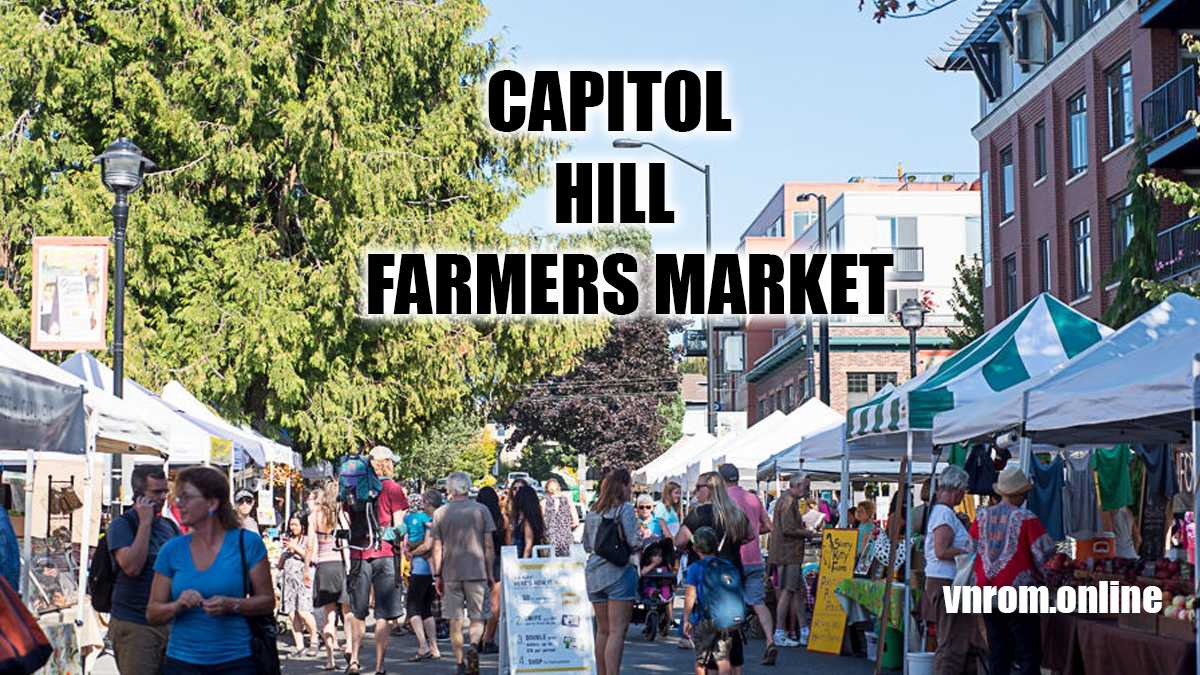
Let me be honest with you. I used to walk right past the Capitol Hill Farmers Market without giving it a second glance. Why? Because I was intimidated. Crowds, confusion about what to buy, and that nagging fear of overpaying for a tomato that tasted just like the grocery store one. Sound familiar?
Well, I was wrong. Dead wrong.
After three years of being a loyal Saturday warrior at this very market, I can tell you that the Capitol Hill Farmers Market is not just a place to buy vegetables. It’s a weekly ritual, a community hub, and honestly, a masterclass in eating well. I’ve made every mistake you can imagine. I’ve shown up at closing time to find empty tables. I’ve bought a dozen peaches that went mushy by Sunday. I’ve even forgotten my reusable bags and had to juggle six apples, a jar of honey, and a bunch of kale in my bare hands. (Pro tip: don’t do that.)
So grab a coffee, settle in, and let me walk you through the 21 best tips, tricks, and secrets I’ve learned. Whether you live on the Hill or you’re just visiting DC, this guide will turn you from a confused browser into a confident, efficient market shopper.
1. Why the Capitol Hill Farmers Market Is Different from Eastern Market
Here’s where people get tripped up. You’ve probably heard of Eastern Market. It’s the historic indoor hall with the butchers, the cheese shop, and the famous blueberry pancakes. But the Capitol Hill Farmers Market is a completely separate beast. It sets up right on 3rd and Independence Ave SE, literally across the street from the Eastern Market metro.
Think of it this way: Eastern Market is your year-round anchor store. The Capitol Hill Farmers Market is the seasonal pop-up that brings the farm directly to your sidewalk.
The first time I went, I wandered into Eastern Market first, bought a loaf of bread, and then stumbled outside to find the farmers market already in full swing. I kicked myself. Don’t be like me. Hit the outdoor Capitol Hill Farmers Market first for the freshest seasonal fruits and vegetables DC has to offer, then duck into Eastern Market for anything you still need.
2. Show Up Early for the Best Fresh Produce Washington DC Offers
You want the first pick of the strawberries? The snap peas that still have morning dew on them? Then you need to be there at opening. The Capitol Hill Farmers Market typically runs from 9 AM to 1 PM on Saturdays (and some Wednesday afternoon versions exist, but Saturday is the main event).
I learned this lesson the hard way. I rolled in at 12:30 PM once, feeling proud of myself for sleeping in. Big mistake. The heirloom tomatoes were gone. The popular mushroom vendor had only cremini left. And the line for the empanadas was forty people deep.
Now, I’m there by 8:45 AM. I get a parking spot easily (more on that nightmare later), I chat with the farmers before the rush, and I leave by 9:30 AM with a haul that would make a French chef weep with joy. Early bird gets the organic kale, folks.
3. The Parking Situation: Don’t Even Try to Wing It
Let’s talk logistics because this can ruin your whole vibe. Finding Capitol Hill Farmers Market parking on a Saturday morning is like finding a unicorn in a haystack. I’m not kidding.
The market is surrounded by residential permit parking only. My first visit, I circled for twenty-two minutes. I counted. Finally, I parked six blocks away and power-walked like I was training for the Olympics.
Here’s what actually works. Use the paid parking lots near the Eastern Market metro. There’s one on Pennsylvania Ave and 8th Street SE. Or, do what I do now: take the metro. The Eastern Market station on the Blue, Orange, and Silver lines drops you off a two-minute walk from the Capitol Hill Farmers Market. No stress, no circling, no tickets. It’s a no brainer.
4. What Days Is the Capitol Hill Farmers Market Open?
This is the number one question I get from friends. What days is the Capitol Hill Farmers Market open? The main, full-scale market runs Saturdays from 9 AM to 1 PM, generally from April through December.
There is also a smaller winter market that moves indoors or to a reduced schedule. Don’t show up in January expecting the same twenty vendors. You’ll be sad. I’ve seen it happen. A tourist couple stood there looking at an empty plaza, phones out, confused. Check their social media before you go. That’s not cheating; that’s being smart.
5. Bring Cash, But Don’t Panic If You Forget
For years, I assumed farmers markets were cash only. So I’d hit the ATM, pay a three-dollar fee, and then watch the person in front of me tap their credit card. Annoying, right?
Most vendors at the Capitol Hill Farmers Market now take cards via Square on their phones. However, and this is a big however, the Square signal can be spotty. I’ve seen a farmer hold up his phone, searching for bars like he was in a wilderness survival show. And some of the smaller, older-school vendors still prefer cash.
Here’s my rule: bring forty dollars in small bills. You’ll move faster, you’ll avoid fees, and you’ll feel like a local. Also, check if they accept SNAP/EBT at Capitol Hill market because they do. The market runs a matching program where they’ll double your SNAP dollars up to a certain amount. That’s real community support.
6. Don’t Buy Anything Without Walking the Full Loop First
This is the golden rule. The rookie mistake is to see the first gorgeous bunch of radishes and immediately hand over your money. Stop. Take a breath.
The Capitol Hill Farmers Market is a U shape. Walk the entire thing before you buy a single item. Why? Because the vendor at the front might be charging $5 for a pint of blueberries, but the vendor at the far end, the quieter one, might have the same berries for $3.50.
I learned this after buying expensive honey at the first tent, only to find a better, cheaper honey from a different apiary three stalls down. Now, I do a “scouting lap” first. I note who has the prettiest tomatoes, who has the longest line (that’s usually a quality signal), and who looks like they need to offload some produce before heading home. Then I circle back and buy. Patience pays off in better prices and better quality.
7. Talk to the Farmers (They Want to Help You)
Here’s something that took me way too long to figure out. These farmers are not grocery store stockers. They grew the food you’re about to eat. They know exactly when the corn was picked (probably 5 AM that morning). They know which apple variety is sweetest right now and which one is best for baking.
One time, I asked a mushroom farmer, “What’s the weirdest thing you grow?” He lit up like a Christmas tree. He spent ten minutes telling me about lion’s mane mushrooms and gave me a free sample. I went home and cooked something I’d never tried before.
Don’t be shy. Ask questions. “How do you store this?” “What’s ripe right now?” “Do you have any ugly produce you’ll sell me for less?” (They almost always do. That “ugly” tomato tastes exactly the same.)
8. The Vendor List Changes With the Seasons
You cannot show up in October demanding strawberries. You will leave disappointed. The vendor list shifts completely based on what’s growing.
June is stone fruit season. Peaches, plums, nectarines. July and August are tomatoes, corn, and eggplant. September brings apples and winter squash. October is all about pumpkins and the last of the peppers.
I keep a little note in my phone of what I want to buy each month. In May, I’m craving asparagus. In August, I’m a tomato glutton. In November, I’m buying kale because everything else is gone. Embrace the rhythm. It makes eating seasonal actually fun.
9. Bring Your Own Bags (And a Cooler If You’re Driving)
I have a confession. I still forget my reusable bags about twenty percent of the time. And every time, I regret it. The vendors have plastic or paper bags, but those flimsy produce bags cannot handle a heavy load. You’ll be that person walking down the street with a bag that rips, sending apples rolling into the gutter.
Get a sturdy canvas tote. Better yet, get two. If you’re driving, throw a small insulated cooler in your trunk. On a hot July morning, your cheese and meat will not survive the drive home in a hot car. I lost a beautiful wedge of goat brie that way. Tragedy.
10. Don’t Sleep on the Non Produce Items
Yes, the vegetables are the stars. But some of my favorite finds at the Capitol Hill Farmers Market aren’t vegetables at all. There’s a bread vendor whose sourdough is so good I hide it from my roommates. There’s a flower vendor who sells the most insane bouquets for less than a grocery store charges.
You’ll also find local eggs, pasture raised meat, honey, pickles, and sometimes even handmade soap. The local artisan crafts are underrated. One vendor sells hand turned wooden spoons. Another sells pottery that looks like it belongs in a museum. Buy one nice thing for yourself that isn’t food. You deserve it.
11. Learn the Lingo of “Fresh Produce” vs “Value Added”
Here’s a pro insider distinction. “Fresh produce” means raw fruits and vegetables. “Value added” means someone took that produce and did something to it. Salsa, jam, pesto, pickles, ready to eat empanadas.
The Capitol Hill Farmers Market has both. The value added items are usually more expensive, but they save you time. I love buying a jar of tomato jam from the vendor who also sells the tomatoes. It feels like cheating. You’re basically buying a shortcut to a fancy appetizer.
My advice? Buy one value added item per visit. A small batch hot sauce. A jar of pickled okra. It breaks up the monotony of just buying raw ingredients.
12. How to Handle a Rainy Market Day
Farmers markets in the rain sound miserable. They are actually amazing. I stumbled onto this secret completely by accident. It started pouring ten minutes after I arrived. Everyone else fled. I was the only customer left.
The farmers were bored. They wanted to talk. And they definitely didn’t want to load all their wet tents back into their trucks. I got deals. Big deals. A flat of peaches for half price. Two loaves of bread for the price of one. Free herbs thrown into my bag.
So if the forecast looks iffy, put on your rain jacket and go. You’ll have the market almost to yourself, and the vendors will be desperate to sell before they have to pack up in the wet.
13. The Empanada Line Is Worth It (But Go First)
Every great market has that one food stall with a line that snakes around the corner. At the Capitol Hill Farmers Market, it’s the empanada lady. I don’t know her name, but I know her food. Flaky, hot, stuffed with spinach and cheese or spiced beef.
The line gets long around 11 AM. If you want one, go when you first arrive. Buy two. Eat one immediately while it’s hot. Save the other for later. I once waited twenty minutes for an empanada and then dropped it on the sidewalk. I’m not joking. I cried a little. Learn from my tragedy. Secure your empanada early and hold it with two hands.
14. Ask About the “Capitol Hill Farmers Market vs Eastern Market” Debate
People love to argue about Capitol Hill Farmers Market vs Eastern Market. Which is better? They’re not competitors. They’re best friends.
Eastern Market is for staples. Cheese, meat, fish, the famous breakfast. The Capitol Hill Farmers Market is for the thrill of the seasonal score. The white asparagus that appears for three weeks in spring. The ramps that chefs go crazy for. The tiny, sweet wild blueberries that only exist in August.
Go to both. They are literally across the street from each other. That’s like asking if you prefer the pizza or the gelato. Have both. You’re on vacation (or you live here and you can have both every weekend).
15. How to Store Everything So It Lasts Longer
I wasted so much food when I started shopping at farmers markets. I’d buy a bunch of beautiful lettuce, shove it in the fridge, and find a slimy mess three days later. Here’s what I learned.
Mushrooms go in a paper bag, not plastic. Herbs go in a glass of water like flowers, with a plastic bag loosely over the top. Tomatoes never go in the fridge. That’s a crime. They get mealy and sad. Leave them on your counter.
Berries? Don’t wash them until you’re about to eat them. Washing introduces moisture, and moisture equals mold. I do a “berry check” every night and eat the softest ones first. This small habit cut my food waste by half.
16. The Best Kept Secret: Wednesday Afternoon Market
Saturday gets all the attention. But there’s a smaller, quieter Wednesday afternoon Capitol Hill Farmers Market during peak season. It runs from 3 PM to 7 PM.
It’s a fraction of the size. Maybe six to eight vendors. But here’s the magic: the Saturday farmers sell to weekend crowds. The Wednesday farmers are usually the same people, but they bring the leftovers from the weekend. You know what that means? Deals.
I’ve bought “seconds” boxes of tomatoes for $5. A seconds box is the bruised or oddly shaped ones that are perfectly fine for sauce. I’ve also never waited in a line on a Wednesday. It’s calm, it’s chill, and you feel like you’ve discovered a secret society.
17. Don’t Be Afraid to Ask for a Sample
This felt pushy to me at first. But farmers want you to taste their products. They’re proud of them. Almost every vendor with prepared food or fruit will let you try a bite if you ask politely.
“May I try a slice of that apple?” “What does that cheese taste like?” I once asked for a sample of a hot sauce that the vendor described as “medium.” It was not medium. My mouth was on fire for ten minutes. But I didn’t buy it, and I was grateful I sampled first.
Sampling saves you from bad purchases and leads you to great ones. Just don’t be that person who samples six things and buys nothing. That’s bad market karma.
18. Bring the Kids (Or Don’t, and That’s Fine Too)
The Capitol Hill Farmers Market is very dog friendly farmers market DC as well as kid friendly. You’ll see puppies everywhere. You’ll see toddlers with smeared berry faces. It’s wholesome chaos.
But if you don’t like crowds, kids, or dogs, go early. Really early. 9 AM sharp. The families with strollers and the golden retrievers tend to arrive closer to 10 or 11 AM. I love dogs, but I don’t love tripping over a leash while carrying a dozen eggs. Know your tolerance and plan accordingly.
19. The Cheese and Dairy Vendors Will Change Your Life
I used to buy generic cheddar from the grocery store. Then I found the cheese and dairy vendors at the market. One vendor sells a smoked mozzarella that I eat straight from the bag like an animal. Another sells a ricotta so fresh and creamy that I put it on toast with honey and call it dinner.
Don’t skip this section. Talk to the cheesemonger. Tell them what you like. “I want something sharp” or “I want something soft and spreadable.” They will point you to exactly the right thing. I’ve discovered at least five cheeses I never would have tried on my own.
20. End Your Trip at the Flower Stand
Here’s my personal ritual. After I’ve bought my vegetables, my bread, my cheese, and maybe an empanada, I go to the flowers and nursery plants vendor. I buy one bunch of whatever is cheapest and brightest. Sometimes it’s sunflowers. Sometimes it’s a wild mix of zinnias and cosmos.
Why? Because carrying flowers home changes the whole feeling of the trip. You’re not just someone who bought groceries. You’re someone who brought beauty into their home. It costs five or ten dollars. And every time I walk past those flowers on my kitchen table, I remember the morning at the market. The sunshine, the chatter, the farmer who told me his secret for growing perfect peppers.
That’s the real reason I keep going back. Not just for the food. For the feeling.
21. The Exact Address and Final Pro Moves
Let me give you the location: 3rd and Independence Ave SE. Put that in your phone right now. The market sets up on the street and in the parking lot of the church on the corner.
Final pro moves. Bring a rolling cart if you plan to buy a lot. Your back will thank you. Wear comfortable shoes. You’ll walk more than you expect. And most importantly, lower your expectations for speed. The Capitol Hill Farmers Market is not a grocery store. It’s slower. You might wait in line. That’s okay. Chat with the person next to you. Ask them what they’re buying.
I once bonded with a stranger over a shared love of patty pan squash. We exchanged recipes. I still use her zucchini fritter recipe to this day.
So go. Get lost in the stalls. Buy the weird mushroom. Sample the spicy honey. And when you get home, lay all your purchases out on your counter and just look at them for a minute. That’s a good life. That’s a Saturday well spent at the Capitol Hill Farmers Market.


