

I still remember the first time I heard the word pappedeckel. I was in a tiny, smoky Kneipe in Cologne, trying to impress a friend with my rusty German. The bartender slid over a Kölsch, and I pointed at the soggy cardboard coaster underneath, asking, “Was ist das?” He grinned, wiped the counter, and said, “Ach, das? Das ist ein Pappedeckel.”
I laughed out loud. It sounded like a cartoon character—something you’d shout when you stubbed your toe. But as the years passed, that funny little word rooted itself in my life. I started seeing it everywhere: under my morning coffee, holding up a wobbly table leg, even in a high-end art gallery where someone had framed one as a commentary on consumerism.
What I discovered is that the pappedeckel is more than just a coaster or a lid. It is a quiet hero of everyday life. It is sustainability in its purest form, a canvas for creativity, and a linguistic artifact all rolled into one. If you have ever undervalued a piece of cardboard, you are about to learn why you need one in your life right now.
Let’s dive into the 7 surprising reasons this unassuming item deserves a standing ovation.
1. It Is the Ultimate Eco Warrior in Disguise
We spend a lot of time talking about saving the planet. We buy expensive stainless steel straws. We agonize over bamboo toothbrushes. But sometimes, the simplest solutions are already in our hands. The pappedeckel is the original sustainable packaging.
Think about it. For decades, this humble piece of Pappe has done the job of plastic without the centuries-long hangover. A standard Bierdeckel is made from recycled fibers. It does its duty, absorbs the condensation, and then it breaks down. It returns to the earth. Compare that to a plastic lid, which will outlive your grandchildren.
I once worked for a catering company where we went through thousands of coffee cups. The owner was obsessed with finding a “green” solution. He spent thousands on biodegradable plastics that often didn’t biodegrade. One day, I brought him a stack of Kaffeedeckel—the old-school cardboard kind. He looked at me like I was crazy.
“They get soggy,” he said.
“They get soggy,” I replied, “and then they disappear. Unlike our invoices.”
We switched. Not only did our waste volume drop by a third, but customers actually loved them. There is something tactile and honest about a cardboard lid. It doesn’t pretend to be premium plastic; it admits it’s just a Deckel doing a job. In a world drowning in microplastics, the pappedeckel stands as a quiet testament to doing more with less.
2. A Nostalgic Throwback to Old World Craftsmanship
There is a misconception that cardboard is cheap and disposable. But historically, the Pappendeckel (the older, more formal spelling) was a sign of durability. The Brothers Grimm, in their dictionary, noted that Pappendeckel were used to build Theaterkulisse—theatrical scenery.
Imagine that. The backdrop for a Shakespearean play, the illusion of a castle or a forest, was held together by sheets of compressed paper fibers. It was the CGI of the 18th century. When I learned this, I started looking at cardboard differently. It wasn’t just packaging; it was potential.
I remember visiting a bookbinder in Leipzig who still uses Buchdeckel made from heavy cardboard. He showed me how to press the fibers, how to layer the Pappe to create a spine that would last a hundred years. He called it ehrliche Arbeit—honest work.
There is a warmth to a pappedeckel that plastic lacks. It ages. It stains. It gets those beautiful water rings that tell the story of the beer you drank on a Tuesday night. It is a physical memory. In our digital world, where everything is stored in the cloud, there is something deeply satisfying about holding a piece of material that was once a tree, then a sheet, then a lid, and now, a memento.
3. The Surprising World of Sammeln (Collecting)
If you think collecting Bierdeckel is just about hoarding trash, you are mistaken. There is a name for this obsession: tegestology. It is a global hobby with millions of enthusiasts. And at the heart of it is the pappedeckel.
I stumbled into this world by accident. A friend of mine, a quiet software engineer named Klaus, has a basement that looks like the Library of Congress—if the Library of Congress only collected coasters. He has over 50,000 pieces. Some are from breweries that closed in the 1800s. Others are limited-edition art prints.
Klaus taught me that Bierdeckel sammeln is about history. A coaster from a 1936 Berlin Olympics beer hall tells you more about that era than a textbook does. The ink, the font, the logo—they are time capsules. We spent hours going through his collection. He would pick up a faded Pappdeckel and say, “This one? This was the last night of my father’s brewery.”
For collectors, the pappedeckel is not a lid. It is a story. And the best part? It’s an inexpensive hobby. You can start today. Just go to a local pub, ask if you can take a coaster home, and suddenly, you have the seed of a collection. It’s a gateway into the past that costs nothing but curiosity.
4. A Canvas for Creativity and DIY Hacks
Let’s talk about the Ach Pappedeckel Bedeutung—the playful exclamation that means “Oh, nonsense!” But it’s not nonsense. It’s creativity.
I am not a crafty person. I once tried to build a birdhouse and ended up with a splintered mess that looked like a murder scene. But the pappedeckel is forgiving. It is the easiest material in the world to work with.
One rainy Sunday, I found myself staring at a stack of clean coasters. My niece was visiting, and we were bored. I googled “Aus Pappendeckel basteln” (crafting with cardboard). What we found blew our minds.
We made:
-
Miniature guitars for her dolls.
-
Wall art by painting abstract patterns on a dozen coasters and gluing them to a canvas.
-
Gift tags for Christmas presents.
-
A phone stand that actually worked better than the plastic one I bought for $15.
Because cardboard is fibrous, it absorbs glue and paint beautifully. It is sturdy enough to hold weight but soft enough to cut with scissors. It is the ultimate prototyping material. If you are an artist, a teacher, or just someone looking for a cheap way to entertain kids on a budget, the pappedeckel is your best friend.
5. The Great German Dialect Debate
Now, we need to talk about linguistics. Because if you say pappedeckel in Berlin, you might get a different reaction than if you say it in Cologne.
This is a Regiolekt Rheinland word. It’s regional. The standard German spelling is Pappdeckel—one “e.” But in the Rhineland, they soften it, draw it out, and make it sound friendlier. Pappedeckel.
I learned this the hard way. I was in Munich, trying to sound cool. I ordered a beer and asked for a “Pappedeckel.” The waiter, a stern Bavarian, looked at me like I had asked for a soda in a wine bar. He said, “You mean Pappdeckel.”
It was a minor linguistic faux pas, but it taught me something profound: language is geography. The way you say a word tells people where you belong—or where you are trying to belong. For me, pappedeckel will always be the sound of Cologne. It’s the sound of carnival, of mild cologne, of friends shouting over a crowded table.
If you are learning German, using the word Pappedeckel is a great way to start a conversation. It’s quirky. It’s informal. And it makes people smile. It breaks the ice faster than “Wie geht’s?”
6. Industrial Strength in a Flimsy Package
There is a reason why the pappedeckel is used for nachhaltige Verpackung (sustainable packaging) in industries today. It is deceptively strong.
I visited a factory once where they produce these things by the millions. I expected flimsy, cheap material. Instead, I saw a hydraulic press slam down on stacks of paper pulp, squeezing out water and air until the fibers fused into a dense, solid disc.
That disc can hold a heavy ceramic mug full of hot liquid. It can support the weight of a book. If you stack them, they become a building block.
One of my favorite analogies is this: the pappedeckel is like a good friend. It looks simple on the outside, but when you put pressure on it, it doesn’t collapse. It holds its shape. It supports you.
We underestimate the physics of cardboard. That little circle of compressed fibers uses the principle of the arch. The fibers distribute weight evenly. It’s engineering, disguised as recycling.
7. The Perfect Metaphor for Life
I’m going to get a little philosophical here, so bear with me.
The pappedeckel is a Pappdeckel. It is a lid. But in life, we often spend too much time looking for the perfect lid. We want the airtight seal. We want the stainless steel finish. We want the branded luxury.
But sometimes, a lid is just something to keep the dust out. Sometimes, a lid is just a coaster to catch the drips.
I remember a moment of clarity a few years ago. I was moving apartments, stressed about money, about relationships, about everything. I had a stack of Bierfilze (felt coasters) on the table. I looked at them and realized I was trying to fix problems with solutions that were too heavy. I was looking for a metal lid when I just needed a cardboard one.
That sounds silly, I know. But there is a beauty in using what you have. The pappedeckel doesn’t ask to be more than it is. It doesn’t pretend to be waterproof or fancy. It does its job, and when it’s done, it goes away.
There’s a lesson in that. Be useful. Don’t overcomplicate things. And if you can make someone smile—like a bartender in Cologne—then you’ve done your job.
How to Choose the Right One (Yes, There Are Options)
If I have convinced you to get a pappedeckel for yourself, you might be wondering where to start. The market is actually diverse.
If you want Pappdeckel kaufen (to buy cardboard lids), you have options:
-
The Beer Coaster: Usually round, absorbent, great for crafts.
-
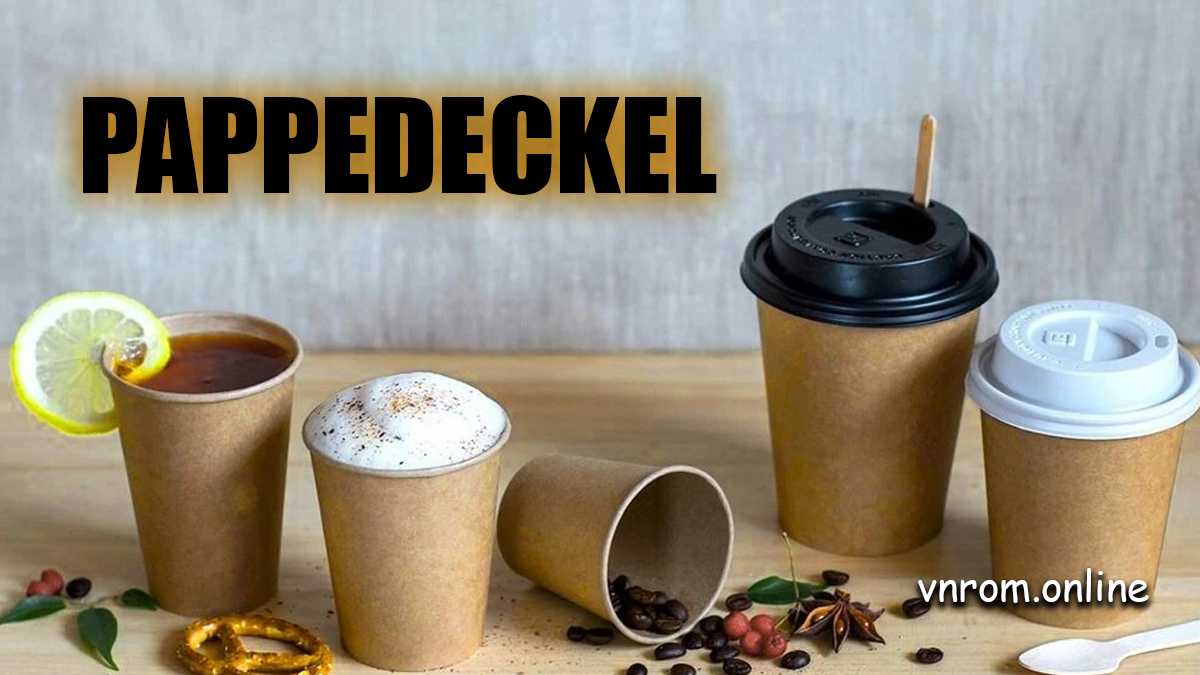
The Coffee Lid: Rectangular or round, often with a heat-resistant coating, perfect for takeout.
-
The Bookbinder’s Board: Thick, dense, used for Buchdeckel.
-
Custom Printed: If you own a business, Bierdeckel bedrucken lassen (having coasters printed) is an incredibly cheap form of advertising. People pick them up, look at them, keep them. They have a retention rate that digital ads dream of.
When I started my small business, I had 5,000 coasters printed with my logo. I handed them out at a local festival. A year later, I still see them on people’s desks. You can’t buy that kind of brand loyalty.
Pappedeckel vs. The World
Let’s do a quick comparison for the skeptics. You might be asking, “Why not just use plastic?” Here is the breakdown.
Plastikdeckel (Plastic Lid):
-
Pros: Durable, waterproof.
-
Cons: Stays in a landfill for 500 years. Made from fossil fuels. Feels cheap (ironically).
Pappedeckel (Cardboard Lid):
-
Pros: Biodegradable, compostable, made from recycled materials, surprisingly strong, aesthetically pleasing.
-
Cons: Gets soggy if left in liquid for hours.
When you do the Pappedeckel vs. Plastikdeckel comparison, the only real win for plastic is longevity. But in a world where we are trying to reduce waste, is longevity for a disposable item really a win? I don’t think so.
A Personal Finale
My journey with the pappedeckel has come full circle. I moved back to the United States a few years ago, but I brought a stack of those Kölsch coasters with me. They sit on my desk.
When I look at them, I don’t just see cardboard. I see the smoke of that old pub. I hear my friend Klaus laughing about his collection. I feel the weight of the hydraulic press in the factory. I remember the stern waiter in Munich.
A pappedeckel is just a word. It is just a material. But the things we attach to objects—memory, emotion, history—that is what turns a simple Pappdeckel into something meaningful.
So, whether you are looking for a sustainable alternative to plastic, a new hobby, a DIY project, or just a good metaphor for life, I highly recommend you get yourself a pappedeckel.
Or better yet, go to a pub, order a beer, and ask the bartender for one. You might just get a story in return.
Frequently Asked Questions (Pappedeckel Edition)
What is the meaning of pappedeckel?
The pappedeckel meaning refers to a lid or cover made of cardboard. In colloquial German, it is most commonly used to describe a beer coaster or a cardboard lid for a coffee cup. It can also be a playful exclamation.
Is it pappedeckel or pappdeckel?
Both are used. Pappdeckel is the standard German spelling. Pappedeckel is a regional variation, primarily used in the Rhineland (Regiolekt Rheinland), giving it a more informal and friendly tone.
Can I recycle a pappedeckel?
Yes! This is the beauty of it. Unlike plastic-coated cups, a standard pappedeckel is made of pure paper fibers and is fully recyclable or compostable.
Where can I buy pappedeckel in bulk?
If you are looking for Pappdeckel kaufen for business use (like for a café or brewery), you can find them at restaurant supply stores or specialized packaging distributors. For custom branding, search for services that offer Bierdeckel bedrucken lassen.
Is collecting beer coasters a real hobby?
Absolutely. Bierdeckel sammeln (collecting beer coasters) is a recognized hobby known as tegestology. It has a massive global community with clubs, conventions, and serious collectors who value rare and vintage pieces.
What can I make with a pappedeckel?
The possibilities for Aus Pappendeckel basteln are endless. Common projects include coasters, gift tags, miniatures for dollhouses, wall art, bookmarks, and even small furniture repairs.
Is a pappedeckel the same as a beer coaster?
Often, yes. While a Bierdeckel is specifically a beer coaster, the term pappedeckel is a broader term that includes coffee lids, book covers, and any other type of cardboard lid. However, in daily conversation, they are frequently used interchangeably.


