


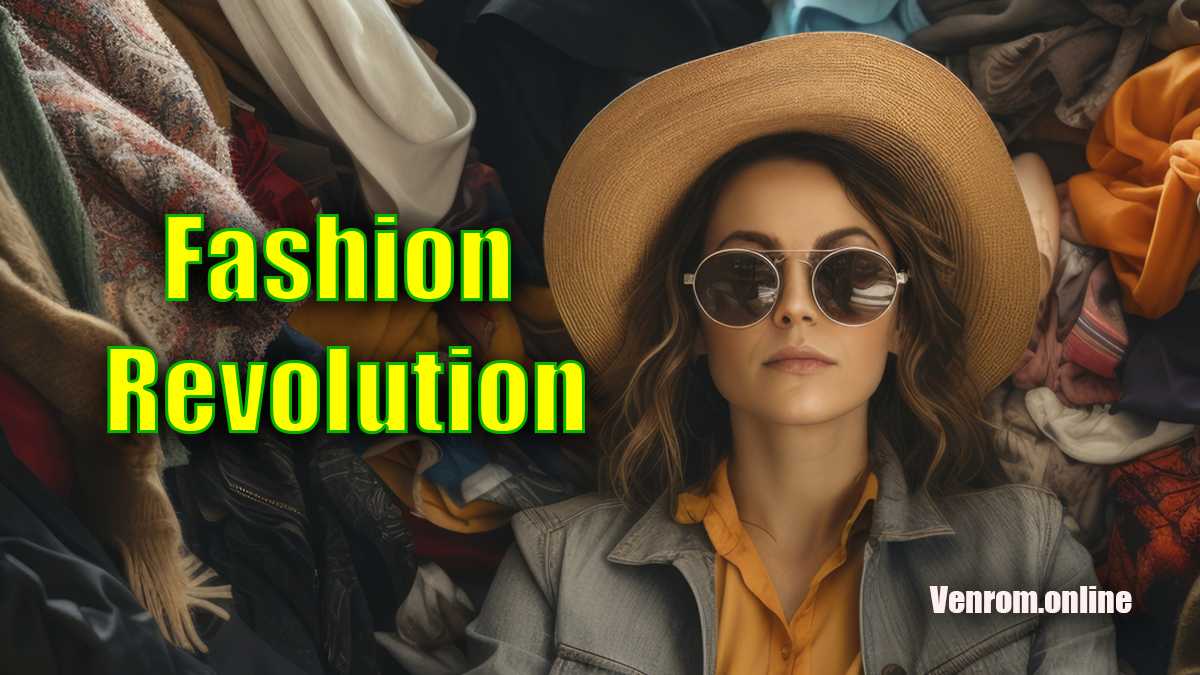
Let me be real with you for a second. I used to be that person with a closet so full I couldn’t shut the door, yet I stood there every morning whining, “I have nothing to wear.” Sound familiar? It wasn’t until I stumbled upon the concept of the fashion revolution that everything shifted. Not overnight, mind you. It was slow, awkward, and honestly a little humbling.
The fashion revolution isn’t about throwing away everything you own and wearing a burlap sack. That’s a myth. It’s about waking up to the reality behind those five dollar t shirts and asking a simple question: who made my clothes campaign started by activists years ago, and why should I care now?
Let me take you on my personal journey. Three years ago, I watched a documentary that broke me open. I saw mountains of discarded clothing in the Atacama Desert so massive they were visible from space. Then came the images of the Rana Plaza collapse. That tragedy killed over a thousand garment workers. I sat on my couch in my cheap fast fashion leggings and cried. That was my wake up call.
Since then, I’ve learned that the sustainable fashion movement is packed with myths, contradictions, and genuine hope. So grab a cup of coffee. Let’s walk through seven ways this revolution actually works, complete with my own embarrassing mistakes along the way.
1 Why the Fashion Revolution Starts With Your Mindset First
Here is the thing nobody tells you. You cannot shop your way into a fashion revolution. I tried. I really did. After that documentary, I went online and bought a hundred dollar organic cotton tote bag and called myself an activist. Cute, right? But I missed the point entirely.
The ethical clothing industry isn’t a shopping category. It’s a mindset shift. Think of it like learning a new language. At first, every word feels forced. You stumble over terms like “circular fashion economy” and “supply chain traceability.” Your friends raise eyebrows when you say no to a five dollar tank top. But slowly, it becomes natural.
I remember standing in a mall dressing room holding two nearly identical sweaters. One cost twelve dollars. The other cost sixty. The cheap one was soft and fit perfectly. The expensive one felt a little scratchy. Old me would have grabbed the cheap one without a second thought. New me stood there for twenty minutes, sweating, because I knew the cheap one likely came from a factory where workers were paid unfair wages.
That moment of discomfort? That’s the revolution happening inside you. The slow fashion vs fast fashion debate isn’t about price tags. It’s about values. And let me be honest: you will make mistakes. I still do. Last month I bought a dress from a brand I later found out was greenwashing. It happens. The point isn’t perfection. It’s progress.
So start small. Pick one category of clothing you buy often. For me, it was jeans. I committed to learning about denim production. That led me to understand textile recycling innovation and how much water a single pair of jeans actually uses. Spoiler: it’s around two thousand gallons. That’s insane.
2 How Garment Worker Rights Are the Heart of This Movement
We talk a lot about fabrics and recycling. But here is the uncomfortable truth. A fashion revolution that obsesses over organic cotton while ignoring garment worker rights is missing the entire point. Clothes are made by people. Real people with names, families, and dreams.
Let me introduce you to someone I met virtually through a documentary. Her name is Sima. She worked in a factory in Bangladesh for fourteen hours a day, six days a week. She earned less than three dollars per day. She had burns on her fingers from a faulty iron. She never saw the inside of the stores selling the shirts she made. Sima is not a statistic. She is a person.
The Rana Plaza collapse in 2013 killed 1,134 workers. That number haunts me. But here is what gives me hope: that tragedy sparked global awareness about fashion transparency. Now, more brands are disclosing their factories. You can actually look up who made your clothes. It is not perfect. Far from it. But it is a start.
I remember the first time I checked a brand’s factory list on their website. I felt like a detective. I scrolled through addresses in Vietnam, Cambodia, and Turkey. I had no idea what I was looking for, honestly. But just the act of looking changed something in me. I was no longer a passive consumer. I was asking questions.
Here is a practical tip. Look for brands that publish their wages and working hours. Not just a pretty mission statement. Real data. The fair wages conversation is complicated because cost of living varies wildly. But a brand that hides its supply chain is usually hiding something bad. Trust me on this.
3 The Overconsumption Crisis and Why Less Actually Becomes More
Confession time. Before my fashion revolution, I owned forty seven pairs of shoes. Forty. Seven. Do you know how many feet I have? Two. I wore maybe eight pairs regularly. The rest sat in boxes, slowly disintegrating, judging me silently every time I opened my closet.
The overconsumption crisis is real, and we are all swimming in it. Fast fashion trains us to treat clothes as disposable. Wear it twice, toss it, buy another. But here is the analogy that stuck with me. Imagine treating your friendships that way. Use a friend for one dinner party, then throw them away and find a new one next week. Absurd, right? Clothes deserve better too.
I started tracking my actual wardrobe usage for one month. I wore the same six items over and over. The rest? Unloved and untouched. That experiment changed everything. I realized I did not need more clothes. I needed to actually see and appreciate what I already owned.
So I tried something radical. I turned all my hangers backward. After I wore something, I hung it forward. At the end of three months, any hanger still backward meant I hadn’t worn that item. You know what happened? I donated two garbage bags full of clothes. It hurt at first. Then it felt like freedom.
The consumer behavior change we need isn’t about deprivation. It’s about intention. Ask yourself before every purchase: does this fill a real gap? Will I wear it at least thirty times? Is it made to last? If you hesitate on any answer, put it back. Your wallet and the planet will thank you.
4 Fashion Activism and How Your Voice Actually Matters
Here is where people get cynical. They say, “One person can’t change an industry.” I used to say that too. But the fashion revolution taught me something powerful. Collective action starts with individual voices. You are not just a shopper. You are a citizen.
I remember writing my first email to a brand. I was nervous. My hands were shaking. I asked them a simple question: where are your clothes made? They sent back a generic response about “global partners.” I wrote again, asking for specific factory names. They ignored me. So I posted the exchange on social media. Within twenty four hours, they replied with a list.
Was that because of me? Partly. But mostly because other people saw my post and started asking too. That is fashion activism in action. It is not marching in the streets (though you can do that too). It is being a squeaky wheel. It is annoying brands until they answer.
I have a friend who started an Instagram account just to tag brands that were silent about their supply chains. She gained two thousand followers in six months. A small brand actually changed its sourcing policy because of the pressure. Two thousand people. A policy change. That is power.
You do not need to be loud or aggressive. You just need to be consistent. Leave comments. Fill out contact forms. Share what you learn. The fashion industry pays attention to reputation. Make transparency the expectation, not the bonus.
5 The Environmental Truth Carbon Footprint of Clothing and Microfiber Shedding
Let me get nerdy for a minute. The carbon footprint of clothing is enormous. The fashion industry produces more carbon emissions than international flights and maritime shipping combined. Let that sink in. Your jeans might fly farther than you do.
But here is the part that really messed with my head. Microfiber shedding. Every time you wash synthetic clothes like polyester or nylon, thousands of tiny plastic fibers break off. They go down your drain, through water treatment plants, and straight into the ocean. Fish eat them. Then we eat the fish. We are literally wearing plastic and then eating it again.
I felt hopeless when I learned this. What is the point? Everything seems to cause harm. But then I discovered solutions. Washing bags that catch microfibers. Guppy bags, they are called. I bought one for fifteen dollars. After every wash, I open the bag and find a fuzzy gray lint ball of plastic. I throw it in the trash instead of the ocean. It is not perfect, but it is something.
The eco friendly apparel industry is improving fast. Brands are experimenting with natural dyes, closed loop water systems, and biodegradable fabrics. But the most sustainable piece of clothing is the one already in your closet. Wash it less. Wash it colder. Air dry it. These tiny actions add up.
I stopped dry cleaning everything. I learned that “dry clean only” is often a lie invented to make clothes seem fancy. I hand wash my delicate items in cold water with gentle soap. They have lasted longer than anything I ever sent to the cleaners. Another bonus: I saved hundreds of dollars.
6 Pre Loved Fashion Economy and Why Secondhand Is Not Gross
Raise your hand if you used to think secondhand clothes were gross. My hand is way up. I remember walking into a thrift store in college and feeling itchy just looking at the racks. I was snobby. I admit it. I wanted new tags and that crisp store smell.
Then my fashion revolution knocked me upside the head. The pre loved fashion economy is incredible. It keeps clothes out of landfills. It saves water and energy. It is cheaper. And honestly, vintage pieces have way more personality than anything in a mall.
My favorite jacket is a denim Levi’s jacket I found at a garage sale for eight dollars. It was faded and had a small tear in the sleeve. I washed it, patched the tear with a scrap of fabric from an old shirt, and now I get compliments every single time I wear it. People ask where I bought it. They never believe it was secondhand.
The textile recycling innovation space is growing too. Brands are figuring out how to break down old clothes into new fibers. But right now, the most effective recycling is simply wearing something again. Secondhand shopping used to feel embarrassing. Now it feels smart. It feels like a secret superpower.
I have a rule now. Before I buy anything new, I check three secondhand sources. Poshmark, ThredUp, and my local thrift store. If I cannot find it used, then I consider buying new from an ethical brand. Most of the time, I find what I need for a fraction of the price. My bank account is happier. My closet is happier. The planet is happier.
7 Circular Fashion Economy and What Happens When Clothes Die
Everything ends eventually. Your favorite jeans will get thin in the thighs. Your winter coat will lose a button you cannot replace. Your sneakers will develop a hole that lets in rain. In the old version of my life, I would have thrown these items in the trash. Out of sight, out of mind.
But the circular fashion economy asks a different question. What if nothing is trash? What if every piece of fabric can become something else? This is not a fantasy. Companies are turning old t shirts into insulation. Denim becomes carpet padding. Wool sweaters become stuffing for dog beds.
I started doing this on a small scale. I cut up a stained white shirt into cleaning rags. I turned a pair of ripped jeans into a tote bag. I gave old towels to an animal shelter. None of this required special skills. I watched YouTube videos and learned basic sewing. It is not beautiful work, but it works.
The hardest lesson for me was accepting that some clothes really are garbage. Low quality fast fashion disintegrates. The fibers are too short to recycle. The blends are too complex to separate. That is the hidden cost of cheap clothes. They end their life as pollution. No second act. No redemption.
That knowledge changed how I buy. I look for natural fibers like cotton, wool, linen. I avoid mystery blends. I ask brands about their end of life plans for garments. The good ones are honest. They say, “We are not there yet but we are trying.” That honesty means more than perfection.
My journey is not finished. I still buy things I regret. I still have moments of weakness in a Zara dressing room. But the fashion revolution is not a destination. It is a direction. You do not have to be perfect. You just have to start.
So here is my challenge to you. Pick one thing from this article and try it this week. Turn your hangers backward. Send one email to a brand. Buy one piece of clothing secondhand. Wash one load of laundry in cold water. Just one thing.


