


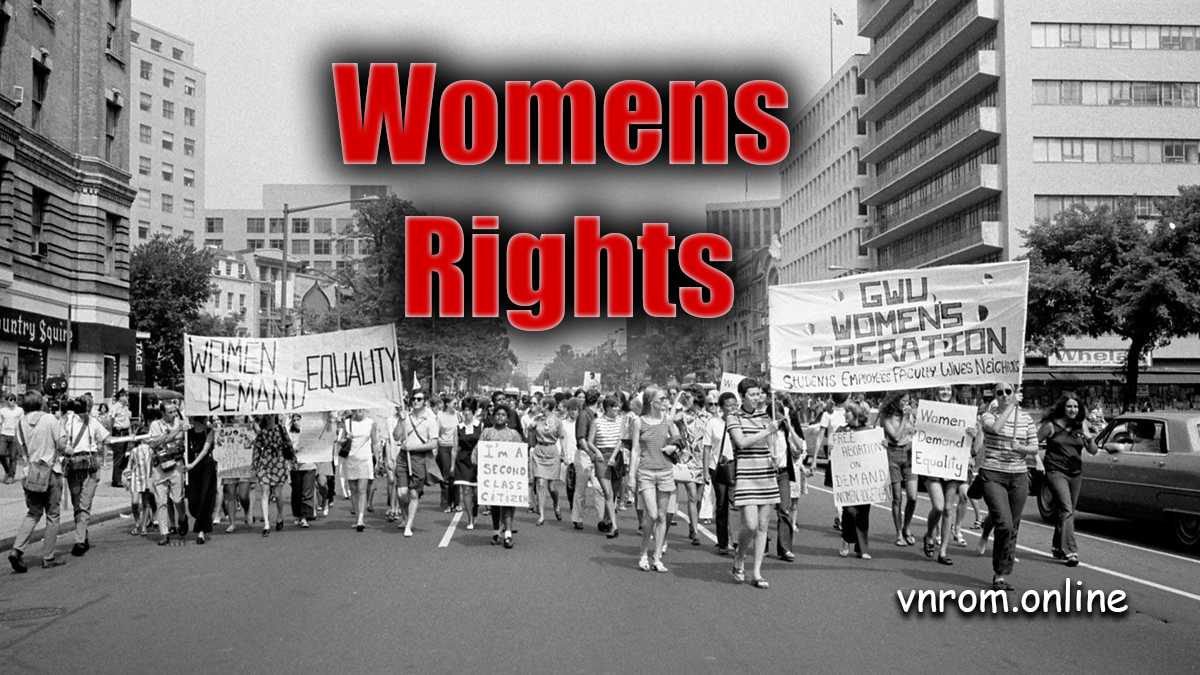
Let me start with a confession. I didn’t always understand what Womens Rights truly meant. Growing up, I thought it was just a slogan on protest signs or something people argued about on the news. It felt abstract, distant. Then life handed me a front row seat. I watched my mother negotiate her salary for eight years without a raise. I saw my sister drop out of college because childcare costs more than tuition. And I realized that Womens Rights aren’t political. They are personal. They are the quiet battles fought in break rooms, delivery rooms, and courtrooms. So today, I want to walk you through ten rights that actually work. Not theoretical ideals. Real, proven, life changing pillars of gender equality that have lifted millions. Grab a coffee. Let’s get into it.
1. Equal Pay for Equal Work The Unfinished Revolution
Here is a number that still keeps me up at night. Women earn roughly 82 cents for every dollar a man makes. For women of color, that number drops even lower. Equal pay for equal work sounds like common sense, right? Yet we have normalized the idea that asking about salary is rude. Imagine buying a car and letting the dealer decide what you pay based on your gender. Absurd. But we accept it in our paychecks.
The good news? Womens Rights advocates have pushed through laws like the Lilly Ledbetter Fair Pay Act. That was a start. But real change happens when we demand transparency. Iceland made history by requiring companies to prove they pay fairly. No certification, no business. That is the kind of teeth we need. I remember my first job out of college. I discovered a male coworker with less experience made five thousand dollars more than me. When I asked HR, they said, “He negotiated harder.” That stung. But it taught me something vital. Reproductive rights and economic power are twins. You cannot have one without the other.
So what works? Salary bands in job postings. Banning questions about previous pay. And honestly? Talking about money with other women. Break the taboo. Equal pay for equal work is not a favor. It is the floor.
2. Reproductive Rights The Power to Choose Your Path
Let me be direct. If you cannot control your own body, you cannot control your life. Reproductive rights include access to contraception, safe abortion, maternal health care, and accurate sex education. These are not controversial in most of the world. They are standard human decency. Yet we still see clinics closing, politicians legislating uteruses, and teenagers learning abstinence instead of anatomy.
I have a friend named Maria. She got pregnant at nineteen. Not because she was careless, but because her rural town had no birth control access. The nearest Planned Parenthood was three hours away. She kept the baby, dropped out of community college, and now works two jobs. I love her son. But I also wonder what she could have become. Womens Rights mean we do not have to choose between motherhood and a future. We can have both, or neither, or something in between.
The Convention on the Elimination of All Forms of Discrimination against Women (CEDAW) calls reproductive health a fundamental right. Over 180 countries have signed it. That is not just a piece of paper. It is a promise. And when countries invest in family planning, poverty drops. Education rises. Violence falls. It is that simple.
3. Ending Violence Against Women The Safety We All Deserve
One in three women worldwide experiences physical or sexual violence. Let that sink in. One in three. That means if you are reading this in a coffee shop, look at the two women next to you. Statistically, one of you has been hurt. Violence against women is not a private issue. It is a public health crisis.
I remember walking home late one night. A car slowed down. The driver rolled his window and said nothing. Just stared. My heart pounded. I crossed the street. He followed. I ran into a lit gas station and stayed there for twenty minutes until he left. Nothing happened. But the fear? That stayed. That is the everyday terrorism that women navigate. Keys between knuckles. Phone ready to dial. Eyes scanning parking lots.
Gendered violence includes domestic abuse, sexual assault, trafficking, and harmful practices like female genital mutilation. The good news? There are solutions that actually work. Fast response police units. One stop crisis centers where survivors get medical, legal, and psychological help in one place. And education. Teaching boys from a young age that no means no. That consent is not complicated. The United Nations Sustainable Development Goal 5 (SDG 5) specifically targets ending all forms of violence against women. It is ambitious. But so are we.
4. Legal Discrimination The Invisible Handcuffs
Have you ever tried to open a bank account and been told you need a male relative’s signature? That happens today in dozens of countries. Legal discrimination is the quiet killer of Womens Rights. It hides in inheritance laws, marriage regulations, and property codes.
I once volunteered with a refugee program. A woman named Fatima had fled war. She arrived with her two children and a law degree. But in her new country, her marriage certificate from home wasn’t recognized. That meant she couldn’t prove custody of her own kids. She couldn’t rent an apartment. She couldn’t work. She was a lawyer who couldn’t sign a lease. That is legal discrimination in action. It is not always a screaming injustice. Sometimes it is paperwork. But paperwork can ruin lives.
The Equal Rights Amendment (ERA) has been fighting for constitutional equality in the United States for nearly a century. It simply says that rights cannot be denied on account of sex. Simple. Powerful. And still not fully ratified. We need to repeal laws that treat women as second class citizens. From divorce settlements to land ownership, the law must see us as full humans.
5. The Suffrage Movement How We Got Here
Let me take you back. For most of history, women could not vote. Could not own property. Could not serve on juries. The suffrage movement changed that through decades of protests, hunger strikes, and relentless organizing. In 1920, the 19th Amendment gave American women the vote. But let us be honest. That mostly helped white women. Black women, Indigenous women, and Asian immigrants kept fighting for decades more.
I think about the suffragettes often. They were called hysterical. Unladylike. Dangerous. Sound familiar? Every time someone dismisses modern feminism as too loud or too angry, I remember those women chaining themselves to railings. They understood something crucial. Womens Rights are not granted. They are taken. And they must be defended every single generation.
The suffrage movement also teaches us about intersectionality long before the word existed. Women of color like Ida B. Wells and Mary Church Terrell fought for both racial justice and gender equality. They knew that intersectionality matters because a Black woman’s experience is not just the sum of racism plus sexism. It is something unique. Something that requires its own solutions.
6. Educational Access The Great Equalizer
Here is a fact that gives me hope. When you educate a girl, she marries later, has fewer children, earns more money, and invests 90 percent of her income back into her family. Compare that to men who invest around 35 percent. Educating girls is the closest thing we have to a magic wand.
I grew up with a library card and a teacher who told me I was smart. That simple combination changed my life. But millions of girls never get that chance. They are pulled out of school for chores, married off as children, or simply told that math is for boys. Educational access is not just about classrooms. It is about buses that run safely. Bathrooms that lock. Curriculums that include female scientists and writers.
Maternal health is directly linked to education. Literate mothers are twice as likely to get prenatal care. Their children have higher survival rates. When the United Nations Sustainable Development Goal 5 (SDG 5) pushes for gender equality, education is always part of the package. Because you cannot empower someone who cannot read her own rights.
7. Workplace Harassment The Silence Breakers
I have a story I have never told publicly. My first boss used to compliment my “professional skirts.” Then he would stand too close. Then he started texting me on weekends. I laughed it off. I told myself he was just friendly. Until one night he cornered me in the supply closet and asked if I wanted to “get drinks and talk about my future.” I quit the next week. I never reported him. I was afraid. Ashamed. Confused.
Workplace harassment thrives on that silence. It uses power imbalances and fear of retaliation. The #MeToo movement changed the conversation, but it did not end the behavior. What works? Clear reporting systems. Anonymous hotlines. Mandatory training that actually focuses on bystander intervention, not just legal definitions. And most importantly, consequences. When powerful men face real accountability, others pay attention.
Female empowerment in the workplace means creating environments where women can say no without losing their jobs. It means mentorship programs that actually promote women, not just assign them more work. It means paternity leave that normalizes caregiving as everyone’s job.
8. Gender Parity The Numbers Game
Gender parity sounds clinical, but it is just a fancy way of saying equal representation. In boardrooms. In parliaments. In newsrooms. In operating rooms. When women hold half the seats, decisions change. Research shows that companies with gender diverse leadership are more profitable. Countries with more women in government pass more laws on health, education, and social welfare. Shocking, right? Women prioritize things that matter to families.
I attended a tech conference last year. Out of twenty speakers, three were women. The organizer shrugged and said, “We invited qualified people.” That is the problem. We mistake familiarity for merit. Gender parity requires intentional effort. Quotas. Rooney rules that require at least one woman candidate for every job. Blind auditions where musicians play behind a screen. These methods work. They have increased female representation in orchestras from 5 percent to over 30 percent.
Economic autonomy is the result of gender parity. When women control money, they control decisions. They leave bad marriages. They start businesses. They send daughters to school. It is a virtuous cycle that benefits everyone.
9. Forced Marriage and Child Brides The Stolen Childhoods
Every year, twelve million girls are married before age eighteen. That is one every three seconds. Forced marriage is not a cultural tradition. It is a human rights violation. Child brides are more likely to experience domestic violence, drop out of school, and die from pregnancy complications. Their bodies are simply not ready for childbirth.
I met a young woman named Aisha in a refugee camp. She was married at thirteen. Her husband was forty two. By fifteen, she had two children and a fist shaped bruise on her arm. She told me, “I never learned to read. I never played with dolls. I went from my mother’s kitchen to a stranger’s bed.” Her voice was flat. Not angry. Just exhausted.
Ending forced marriage requires community based solutions. Educating religious leaders. Providing safe houses for runaways. And enforcing laws that actually prosecute offenders. The Convention on the Elimination of All Forms of Discrimination against Women (CEDAW) explicitly condemns child marriage. But treaties mean nothing without implementation.
10. Patriarchy and Intersectionality The Root and the Remedy
Let me name the elephant in the room. Patriarchy. It is the system that says men lead and women follow. Men decide and women accommodate. It hurts everyone. Men are told to be emotionless providers. Women are told to be nurturing supporters. Nonbinary people are told to pick a side.
I used to think patriarchy was just history. Then I watched my father refuse to take paternity leave because “that’s for mothers.” I watched my brother cry alone in his car after a breakup because “men don’t show weakness.” I watched myself apologize for speaking too much in meetings. The system is so deep we breathe it like air.
Intersectionality is the tool that helps us see the whole picture. A wealthy white woman and a poor Black woman face different obstacles. Their Womens Rights strategies must look different. Disability, sexual orientation, immigration status, religion, all of these layers matter. When we fight for the most marginalized among us, everyone rises.
Conclusion The Work Continues
So here we are. Ten rights that actually work. From reproductive rights to equal pay for equal work, from ending violence against women to achieving gender parity. I have shared my fears, my failures, and my stubborn hope. Because that is what Womens Rights are to me. Not a checklist. Not a trending hashtag. A daily choice to believe that half of humanity deserves the same dignity as the other half.
You might feel overwhelmed. That is okay. Start small. Talk to your son about consent. Ask your employer about salary transparency. Donate to a local shelter. Vote like your life depends on it, because for many women, it does.
The suffrage movement took generations. The Equal Rights Amendment (ERA) is still unfinished. But every single victory, from maternal health improvements to gendered violence laws, happened because ordinary people refused to stay quiet. That is you. That is me. That is us.


